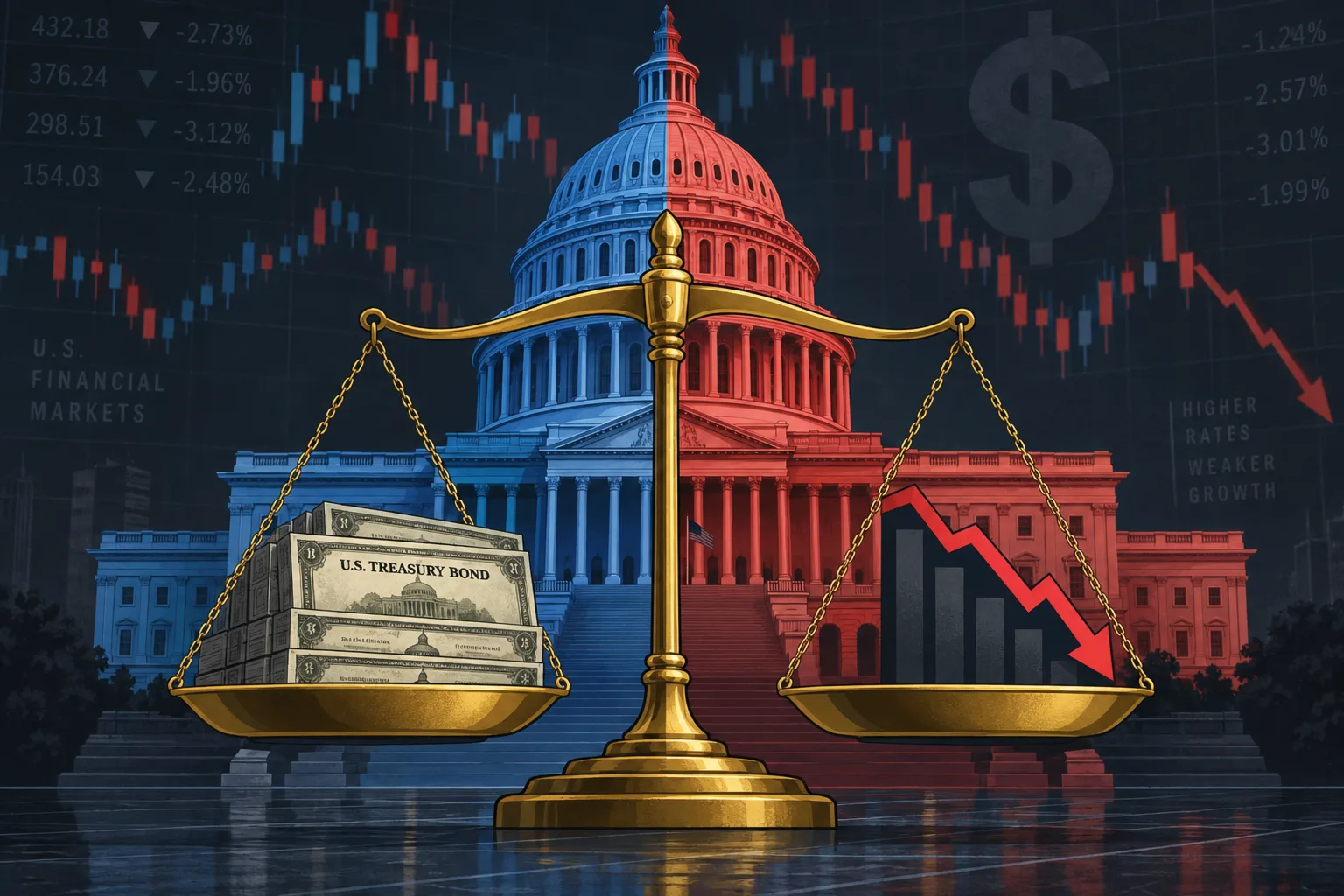
US Treasuries rose on Wednesday while equities and the dollar weakened, after the Democratic Party won control of both chambers of Congress in the midterm elections, ProFinance reported. Investors are also waiting for the US Treasury's quarterly borrowing announcement later in the day.
The result ends single-party control of Washington and, in the view of market participants, narrows the Trump administration's room to push through its tax and spending agenda. The shift in Congress lowers the prospect of extra government outlays that would require larger Treasury issuance — a concern for holders of US debt at a time when the national debt stands at roughly $40 trillion.
Why it matters
The election outcome changes the fiscal arithmetic that has driven bond markets for the past several years. With Congress split between the parties, investors expect less deficit-financed spending, which reduces the supply of new Treasuries they will be asked to absorb.
Yields fell across the curve. The five-year yield dropped 9 basis points to 4.67% before trimming the move slightly, the 10-year yield touched 4.89%, and the dollar index lost 0.3%, according to ProFinance.
Lower market rates cut the return available on carry trades and are therefore a potential drag on the dollar, while acting as a tailwind for equities. Wednesday's bond rally also partly reverses the previous session's selloff, when yields climbed after strong economic data strengthened the case for Federal Reserve rate increases. Traders are additionally looking ahead to Friday's October labor market report.
Divided government seen as supportive for bonds
Several strategists quoted in the reporting read the result through the lens of fiscal restraint. Brij Khurana of Wellington Management said divided government points to smaller fiscal outlays than in recent years and noted that such configurations have historically been favorable for Treasuries.
Nathan Thooft of Manulife said a Democratic Congress "likely means less fiscal impulse, potentially lower Treasury yields and one less bullish factor for the dollar," according to the reporting.
Brendan Fagan of Bloomberg argued that a Democratic Congress could over time challenge the story of US exceptionalism, particularly if investment in artificial intelligence and economic growth shift, though he framed that risk as a long-term one.
Justin Lin of Global X ETFs attributed the bond rally to opportunistic dip-buying now that the peak of election uncertainty has passed. He said sentiment, especially around AI, is negative following the Democratic win, but noted the outcome was not a surprise.
The Democrats' gains were broad. They won races in states long regarded as Republican strongholds, flipped at least six Senate seats and took House districts that Republicans carried comfortably in 2024, according to the reporting.
Borrowing plans in focus
Beyond the election, attention turns to the Treasury's quarterly refunding statement. Wall Street expects the department to adjust borrowing guidance that has held steady issuance plans for notes and bonds for more than two years.
A change could set the stage for a possible reduction in 2027 in sales of the longest-dated debt, offset by larger placements of bills and shorter notes. Leaning more heavily on bills, which mature within a year, to fund growing budget needs would test investors' appetite. The US already holds weekly Treasury auctions totaling more than half a trillion dollars, leaving the department exposed to sudden swings in market conditions, ProFinance reported.
Watch the Treasury's refunding statement and Friday's payrolls data, which together will show whether the bond rally holds.